
The International Diversification of Players Promoting Freedom of Religion or Belief
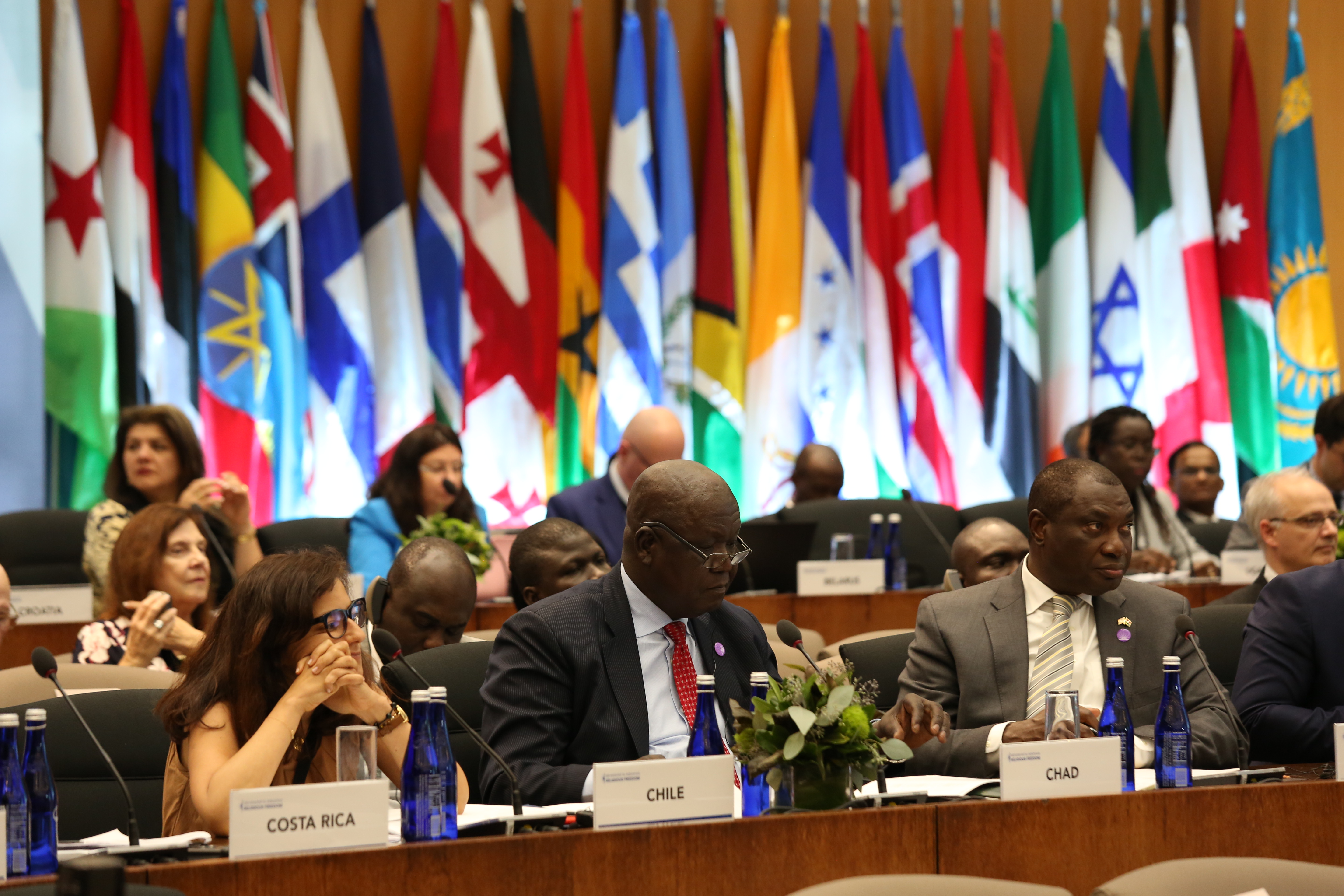
The 2019 Ministerial to Advance Religious Freedom. photo credit: U.S. Department of State. Flickr.
By Monica Duffy Toft, M. Christian Green, and Dennis R. Hoover
The international promotion of freedom of religion or belief (FoRB) is still often seen as a peculiar preoccupation and priority of American foreign policy. This reputation originated, in part, from the fact that the U.S. was indeed the first nation to create specialized positions and institutions within its foreign policy structure focused on international religious freedom. In 1998 the U.S. passed the International Religious Freedom Act (IRFA), which created the position of Ambassador at Large for International Religious Freedom, as well as an independent, bipartisan U.S. Commission on International Religious Freedom. IRFA also mandated that the State Department issue a detailed annual report on the state of religious freedom in every foreign country, and that the President designate the worst cases as “countries of particular concern” (CPCs) that could potentially be subject to sanctions.
While other democratic nations and multilateral bodies certainly gave someattention to FoRB issues, this attention was usually folded into a broader mix of human rights advocacy. In the context of the 1990s, the U.S. was distinctive in shining a spotlight directly on religious freedom and making significant foreign policy investments explicitly focused on this issue domain. For fans of these policy innovations, American leadership was often interpreted sympathetically, while critics were quick to label the enterprise an exercise in improper unilateralism or even cultural imperialism.
Two decades later, however, the “American exceptionalism” reputation on FoRB promotion is becoming rather anachronistic. Today the field of international FoRB advocacy has become significantly multi-country and multi-lateral. Public perceptions have not yet caught up to this reality. Accordingly, in this post,[1] we provide a brief overview of some of the key examples of FoRB advocacy by non-U.S. actors around the world. This survey derives in part from research conducted under auspices of one such actor—the Commonwealth Initiative for Freedom of Religion or Belief, based in the UK (more on this below). We first profile several government-level initiatives undertaken by individual countries and multilateral associations, and then describe several parliamentary level initiatives. We conclude with some reflections on the overall evolution and state of the practice.
Government Initiatives
Some of the initiatives in this category have been similar to, if not directly modeled on, the executive branch structures created by IRFA in the U.S. One of the best-known examples is Canada’s creation in 2013 of an Office of Religious Freedom within the Department of Foreign Affairs, headed by an Ambassador for Religious Freedom. The creation of the office and Ambassadorship fulfilled a campaign promise made by Conservative Prime Minister Stephen Harper. The Harper government appointed Andrew P.W. Bennett, an academic and civil servant, to the Ambassador post. Though Bennett was widely respected personally, the initiative did draw considerable political criticism for an alleged bias in favor of conservative Christianity. The Office and Ambassadorship were terminated in 2016 by the newly-elected Liberal Prime Minister Justin Trudeau. Still, the FoRB issue was not abandoned entirely, as the Trudeau government directed that it become part of a broader agenda under the rubric of human rights through the Office of Human Rights, Freedom, and Inclusion.[2]
The United Kingdom has also demonstrated considerable innovation and leadership in the international FoRB field over the last decade. During the coalition government that lasted from 2010 to 2015, Baroness Sayeeda Warsi served as Minister of State for Faith and Communities, reporting directly to the Foreign Secretary and a supporting Foreign Office Advisory Group on the Freedom of Religion and Belief.[3] Asked what the FCO hoped to achieve through its new emphasis on FoRB, Baroness Warsi stated: “We started off from a very low base… [because] the concept of faith in the public sphere—even talking about faith in the public sphere, or belief, or religion—was considered in itself to be politically either naive or stupid. When we first came into Government, it was important to me that the first speech I made was that this Government would вЂdo God.’ I wanted to signal a change.”[4] She continued by noting that it was important to increase religious literacy and build confidence to have tough conversations around such sensitive issues as FoRB, and that the “FCO wanted to bring in expertise, and had done so through the sub-group on freedom of religion or belief, to help the FCO formulate campaigns and policy.” Following Baroness Warsi’s 2014 resignation, the Minister of State for Faith and Communities position was subsequently downgraded to a role within the Department for Communities and Local Government (DCLG).
However, last year the UK made another high-profile investment in FoRB diplomacy and education. On July 4, 2018, Conservative Prime Minister Theresa May appointed Lord Tariq Mahmood Ahmad as the first Special Envoy on Freedom of Religion or Belief.[5] Part of a program announced earlier by Prime Minister May to promote religious tolerance domestically in the U.K., the new special envoy is specifically tasked with promoting British commitment to FoRB internationally. Lord Ahmad also serves as Minister of State for the Commonwealth and the UN at the Foreign and Commonwealth Office and as the Prime Minister’s Special Representative on Preventing Sexual Violence in Conflict. The director of the U.K. organization Faith Research Centre, Katie Harrison, applauded the focus of the special envoy position on religious intolerance against minorities, observing that “Whether that’s Muslims in Myanmar, Christians in the Middle East, or Yazidis in Iraq, you see people being singled out and really, really suffering as a result. I think that we’re starting to see in Western countries quite a lot of recognition of that, and people wanting to do something about it.”[6]
As highlighted in a new report from the Danish Institute of Human Rights, several countries in recent years have made similar appointments of special envoys or ambassadors. Norway appointed a special envoy in 2016, as did Denmark, Germany, and Holland in 2018. Nor is this trend confined to Europe. In March of 2019 Taiwan announced the appointment of its first ever Ambassador at Large for International Religious Freedom. The European Union has also become much more active on FoRB issues in recent years. In 2013, the Council of the European Union issued the widely noted “EU Guidelines on the Promotion and Protection of Freedom of Religion or Belief.” And in 2016 the EU appointedJan Figel as the first-ever Special Envoy for the Promotion of Freedom of Religion or Belief outside the EU.
Such diplomats often work in close collaboration with civil society organizations and relevant multilateral bodies on human rights. For instance, Norway has emerged as a FoRB player that frequently “punches above its weight” for a small country by exercising leadership on FoRB within UN bodies and through collaborative and sponsorship relationships with organizations such as the Norwegian Centre for Human Rights (NCHR), where the Oslo Coalition on Freedom of Religion or Belief is responsible for the FoRB section of the international program at the NCHR. The Oslo Coalition relies on an international network of representatives from religious and other life-stance communities, NGOs, international organizations, and research institutes, as well as its own Advisory Council.
Beyond specialists in FoRB, other foreign policy officials around the world have received education, encouragement, and networking assistance on FoRB from the International Contact Group on Freedom of Religion or Belief (ICG-FoRB). The ICG-FoRB was established by Canada in 2015, and is co-sponsored by the United States. It is an ad-hoc group, and the primary participants are representatives from foreign ministries and other ministries related to FoRB. Officials from nearly 30 countries have participated in ICG-FoRB activities. Its primary meetings are held on the margins of the United Nations General Assembly in New York and the United Nations Human Rights Council in Geneva.
Parliamentary Initiatives
Alongside these executive branch trends there has been a parallel surge in parliament-led initiatives. The UK has been particularly notable in this regard. Since 2012 the UK Parliament has had a well-resourced All Party Parliamentary Group for International Freedom of Religion or Belief (APPG FoRB) that works with parliamentarians to raise particular FoRB issues within the parliamentary system for response by the relevant government minister. U.K. Minister of Parliament Naomi Long explained the role of parliamentarians in relation to FoRB as: (1) “to raise public awareness of the issue’s importance… becoming more active advocates in defence of religious freedom as a result, (2) “to focus our attention and to encourage renewed vigour in our Government and abroad in defence of the principles,” and (3) “to raise with the Government specific concerns about individual countries, faiths, and regimes.”[7]
UK parliamentarians were also among the key leaders in the formation in 2014 of the International Panel of Parliamentarians for Freedom of Religion or Belief (IPPFoRB), an international contact group thatshares best practices among parliamentarians around the world to address FoRB issues through parliamentary mechanisms in their own countries. The initial planning meetings occurred in Oxford in June 2014, and IPPFoRB was officially launched in Oslo at the Nobel Peace Center in November 2014. According to its website, parliamentarians from over 97 countries are now affiliates of IPPFoRB. The website maintains a listof national parliamentary groups that have formed on FoRB (Brazil, Canada, Denmark, Dominican Republic, Honduras, Nepal, Norway, Pakistan, and Indonesia), as well as regional parliamentary associations such as the European Parliament Intergroup on Freedom of Religion or Belief & Religious Intolerance, Southeast Asian Parliamentary Working Group on FoRB, and IPPFoRB Latin America.
A unique institution supporting the parliamentary trend was the Commonwealth Initiative for Freedom of Religion and Belief (CIFoRB). CIFORB was a 3-year grant-funded initiative established in 2015 and hosted by the University of Birmingham, UK. It was headed by Baroness Elizabeth Berridge, a long-time leading voice on FoRB issues within the House of Lords and around the world. CIFoRB sponsored networking and education, with a particular focus on enhancing the potential of parliamentarians serving in parliamentary democracies across the Commonwealth of Nations. It also supported research and publications, including a project on “Freedom of Religion or Belief Across the Commonwealth,” which produced a special issue of The Review of Faith & International Affairs.
Concluding Reflections
The United States government is no longer a “Lone Ranger”on international religious freedom issues on the global stage. Many other governmental and inter-governmental actors are now playing significant roles. While American leadership was obviously crucial in the early stages of the development of the field, and remains central today, there has been significant diversification and diffusion of FoRB expertise and capacity around the world.
To be sure, the internationalization of international religious freedom promotiondoes not immunize it from some of the critical questions that have been directed at the United States since the 1990s. Are such efforts exacerbating situations in fragile and politically tense environments, worsening the very problems they are designed to resolve? Is the framing of FoRB as an issue of religious persecution hindering solutions? Is it possible that religious freedom advocacy is not the answer to violence and oppression, and that it might mask the true causes of conflict, and harden lines of division between communities? What happens when a state celebrates religious freedom, but then denies it to those religions it does not like? Does this advocacy create a hierarchy of human rights that inappropriately favors religious freedom? Is the issue promoted in a genuinely even-handed way across all religions/worldviews, or are some traditions implicitly or explicitly favored? Are Western religions and/or Western conceptions of FoRB implicitly or explicitly favored?
FoRB advocates have long articulated thoughtful answers to such questions—but the cultural and political sensitivity of these issues guarantees that tough questions will continue to be asked. The rise of non-American leadership, especially non-Western leadership, is therefore an important development for the future of FoRB promotion. Many veteran American leaders on FoRB have in fact long been actively promoting this very process of internationalization. While such leaders might understandably take pride in the history of American trail-blazing on this issue, they are wise to work diligently for a future in which the issue is no longer seen as carrying a “Made in America” tag.
В
Monica Duffy Toft is Professor of International Politics and Director of the Center for Strategic Studies at the Fletcher School of Law and Diplomacy at Tufts University.
M. Christian Green is a scholar of law, religion, human rights, and global ethics.
Dennis Hoover is Senior Fellow at the Institute for Global Engagement and the editor in chief of The Review of Faith & International Affairs.
В
[1]Portions of this essay are adapted from Monica Duffy Toft and M. Christian Green, “Progress on Freedom of Religion or Belief?: An Analysis of European and North American Government and Parliamentary Initiatives,” The Review of Faith & International Affairs16(4). This essay, like The Review, uses American spelling throughout.
[2]“Religious freedom office replaced with new вЂoffice of human rights’,” CBC News, 18 May 2016.
[3]Foreign & Commonwealth Office, “Press release: Foreign Office Advisory Group on freedom of religion or belief: Baroness Warsi chairs first meeting of Foreign Office group on Freedom of Religion or Belief to discuss vision and strategy,” 25 March 2014.
[4]Parliament UK, House of Commons Foreign Affairs Committee, “The FCO’s human rights work in 2013.” Foreign Affairs Committee-Sixth Report, 11 November 2014. Online at: https://publications.parliament.uk/pa/cm201415/cmselect/cmfaff/551/55111.htm
[5]Government U.K. “Lord Ahmad appointed as PM’s Special Envoy to promote religious freedom,” press release, 4 July 2018.
[6]Alex Williams, “Prime Minister appoints first special envoy on freedom of religion,” Premier, 5 July 2018.
[7]Parliament UK, House of Commons, “Freedom of Thought, Conscience and Religion,” vol. 579, 1 May 2014.
В
Religion and Illiberal Democracy in India Today
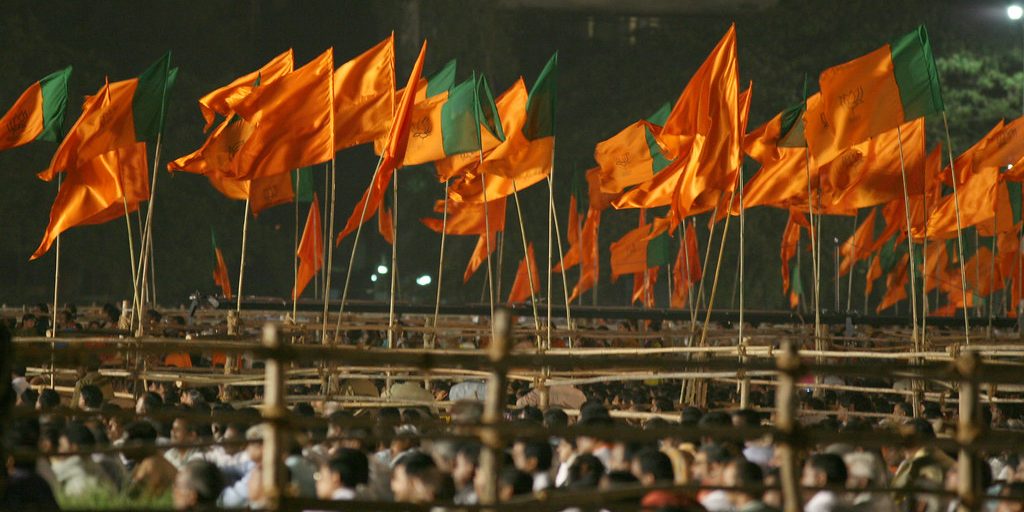
Party flags of the BJP and Shiv Sena at an election rally in Mumbai in 2008. photo credit: Al Jazeera English. Creative Commons.
By Amrita Basu
The ebbs and flows in the fate of democracy and minority rights in India make it an especially important case for comparative analysis on freedom of religion or belief (FoRB).[1] India, with its 1.34 billion people, is by far the world’s largest democracy. And yet India, like so many countries, is experiencing the rise of xenophobic nationalism and violence against religious minorities. The United States Commission for International Religious Freedom (USCIRF) 2018 report recommends designation of India—alongside Afghanistan, Azerbaijan, Bahrain, Cuba, Egypt, Indonesia, Iraq, Kazakhstan, Laos, Malaysia, and Turkey—as a Country of Particular Concern because of the extent and nature of violations of religious freedoms that the government tolerates or promotes. The report states that an exclusionary conception of national identity based on religion has threatened India’s multicultural and multi-religious identity. The USCIRF attributes responsibility for anti-minority violence to Hindu nationalist organizations, including the governing Bharatiya Janata Party (BJP). These concerns are echoed by several other international organizations, including the United Nations, Amnesty International, and Human Rights Watch.
India’s constitutional design and legal regime simultaneously create a secular, democratic state and privilege the interests of the Hindu majority. The constitutional framework has enabled the courts, legislatures, and political parties to undermine religious freedoms and minority rights within the democratic framework. These features of Indian democracy that made it vulnerable to sectarianism. Hindu nationalist organizations, including the parent body, the Rashtriya Swayamsevak Sangh (RSS) and its affiliates, the BJP, Visva Hindu Parishad (VHP), and the Akhil Bharatiya Vidyarthi Parishad (ABVP), have long been the major proponents of Hindu majoritarianism. Their attacks on minority rights and religious freedoms have escalated since the BJP formed the National Democratic Alliance (NDA) government in 2014 and again 2019. As a result, minority rights and religious freedoms are increasingly threatened and the ties that bind democracy and secularism, under stress since Independence, have become considerably more frayed.
Religious Freedom
On the face of it, as the term freedom of religion implies, the relevant legislation would seem to prohibit coercion and ensure that individuals freely choose their faith. But in fact, its intent and effects are precisely the opposite. It increases the state’s propensity to engage in surveillance and punishment, while undermining religious freedom. In some instances, the state has challenged individuals who said they had converted voluntarily (Jenkins 2008).
The fact that the Constitution, various laws, and dominant understandings of secularism have never adequately protected religious freedom for minorities in India has given political leaders and jurists enormous discretion. State governments have enacted laws and policies that prohibit cow slaughter and restrict conversions out of Hinduism. Prospective political candidates often inflame Hindu-Muslim tensions to gain the electoral support of the Hindu majority.
BJP governments have either strengthened existing legislation or passed new, more restrictive anti-conversion laws in several states. Himachal Pradesh was the only state where a Congress rather than BJP government introduced such legislation. Five BJP state governments have passed laws which require community members to inform the police and administration if they suspect that pastors, nuns, and clergymen are proselytizing. The laws passed in Gujarat in 2003 and introduced in Chhattisgarh, Himachal Pradesh, and Madhya Pradesh in 2006 made conversions that were deemed to have entailed force or allurement non-bailable and cognizable. Rajasthan soon followed suit. These laws required individuals to inform the district magistrate about their intention to convert (in Gujarat, a month before the conversion, and in Madhya Pradesh and Himachal Pradesh, within a specified time afterwards). They allowed district magistrates to investigate cases and determine whether conversions entailed force or coercion. They introduced harsh penalties for those who violated the law. The jail sentences in these states were between two and five years. In 2014, Union Minister Venkaiah Naidu proposed that Parliament enact national anti-conversion laws (Rao and Sinha 2014).
Laws passed by BJP state governments in Tamil Nadu, Gujarat, and Rajasthan impose the stiffest penalties for the conversion of Dalits (also known as Untouchables and Scheduled Castes), women, and tribals (also known as Scheduled Tribes).[2] Gujarat increased the penalty for conversion by Scheduled Castes (SCs), Scheduled Tribes (STs), minors, or women to up to four years imprisonment and a fine of up to $2,174. In Himachal Pradesh fines were doubled to $1,087 and up to three-years imprisonment when the offenses concerned minors, women, and SCs and STs. By heightening scrutiny of Hindus who convert, the law popularizes the notion that Christians and Muslims are ruthless foreigners who take advantage of gullible, passive victims. In fact, many Dalits freely converted out of Hinduism to escape rigid caste stratification. One study, based on extensive interviews with Dalit women from the Bangalore slums, found that they had freely converted to Christianity and that conversion had increased their sense of dignity and well-being (Shah and Shah, 2019).
The assumption that conversion out of Hinduism is coercive, whereas conversion to Hinduism rectifies past injustices, underlies the VHP’s mass reconversion ceremonies, tellingly named ghar wapsi(homecoming or return to the flock) (Harris 2014). The VHP claims it has converted 500,000 Christians and 250,000 Muslims to Hinduism; Christian leaders believe these figures are inflated and demand an official investigation.[3] Some of the people who were “reconverted to Hinduism claim that they were threatened with violence if they failed to comply” (Bengali and Partha 2014).
Hindu nationalists have often made conversions a pretext for anti-minority violence.
According to one Christian human rights organization, there were 348 attacks on Christians in 2016 and 260 attacks from January to May 2017 (Thomas 2017). Those who engage in these attacks do not feel the need to prove that Christians are engaging in forcible conversions. The point of the attacks is to warn Christians that their religious identities make them suspect. Thus, the targets are often people attending church services and celebrating Christmas.
Beef Ban Violence
The RSS has long campaigned for a total national ban on cow slaughter, and BJP state governments in Uttar Pradesh, Madhya Pradesh, and Jharkhand all adopted laws fully or partially banning it in 2003.The Maharashtra and Haryana governments increased the penalties and jail terms for beef possession and cow slaughter in 2015.The Gujarat government increased the maximum punishment for cow slaughter from 7 years to life imprisonment and increased the penalty for transporting beef from 3 to 10 years in March 2017 (Najar and Raj 2017). Currently, 24 out of India’s 29 states have regulations prohibiting either the slaughter or sale of cows. These laws have encouraged Hindu nationalist activists to engage in violence against Muslims and Dalits whom they suspect of cow slaughter and beef consumption (Human Rights Watch 2017).
National government officials have demonstrated their support for a national beef ban—indeed, Home Minister Rajnath Singh has done so quite explicitly. Union Minister Mukhtar Abbas Naqvi remarked that “those who want to eat beef can go to Pakistan” (Hindusthan Times2015). In May 2017, the Ministry of Environment imposed a ban on the sale of cows and buffaloes for slaughter at livestock markets across India. The following month, the national government issued new regulations requiring that any person selling livestock produce a written guarantee that it would not be slaughtered. These regulations effectively ban the sale of buffaloes as well as cows for slaughter.
Narendra Modi is indirectly responsible for beef ban-related violence. During the 2014 election campaign, he attacked the Congress Party for introducing a “pink revolution,” that he claimed resulted from increased cow slaughter. He delivered fiery speeches on the subject during his campaign for the 2015 elections in Bihar. In September 2015, in what came to be known as the Dadri lynching, after a rumor that a man named Mohammad Akhlaq had slaughtered a cow and consumed beef, a mob stormed his home in Delhi, murdered him and wounded his son. Modi waited eight days before addressing the crime, and then declared that, while such events were unfortunate and undesirable, the national government could not stop them. He lambasted the opposition for criticizing the BJP. He neither visited the family of the deceased nor condemned comments of his political allies that exonerated the murderers.
Following pressure from the United States, Modi issued a second statement, in which he proclaimed that his government would ensure complete freedom of faith. He subsequently instructed BJP head Amit Shah to dampen the enthusiasm of BJP leaders for a nationwide beef ban, but not to interfere with the decisions of state governments. Unsurprisingly, Modi’s statements did nothing to stop the wave of attacks on Muslims who were accused of consuming beef and killing cows. Modi spoke up again after a video that went viral showed a group of Hindu men brutally beating several Dalit youth who were skinning a cow carcass in Una Gujarat in July 2016. The assailants were not deterred by Dalits’ claim that the cow was already dead. Modi criticized the actions of cow vigilante groups and acknowledged that cows often died not because they were slaughtered, but because they consumed plastic on roadsides. However, he ignored the close ties between what he termed “anti-social” vigilante groups and BJP state governments. Days after Modi’s speech, the Haryana government created a police task force in each district to detect cow smugglers and licensed gau rakshas(cow protection groups) to assist the police (Raj 2016).
Hate Speech
The past few years have witnessed attacks on free speech and an increase in hate speech. India fell two ranks on the World Press Freedom Index, from 136 to 138 among 180 countriesfrom 2017 to 2018.[4] New Delhi Television Limited (NDTV), a respected independent television station that has been sanctioned by the Modi government, found that hateful and divisive language by high-ranking politicians (elected representatives—MPs, MLAs and chief ministers—as well as party leaders and governors) had increased almost 500 percent in the four years since Modi took office and that BJP politicians had made 90 percent of the hateful comments.[5]
Hate speech by BJP leaders is mostly directed at minorities and much of it has focused on cow protection. There is a clear link between BJP leaders’ hate speech and violence. The fact-checking site India Spend reported that 97 percent of gau rakshaattacks since 2010 occurred under the Modi government. They counted 76 attacks from May 2014 to December 2017, compared to only two instances from 2010 to May 2014. Upon being sworn in as Chief Minister of Uttar Pradesh, Yogi Adityanath announced a zero-tolerance policy on matters related to cow smuggling and slaughter. The police and bureaucracy not only shut down all illegal and mechanized slaughterhouses, but also many of the legal ones. Adityanath’s orders unleashed extensive violence. Three meat shops selling meat and fish were burned in the city of Hathras.
Chief Minister Adityanath has also engaged in hateful attacks on Christians and women. The right-wing Hindu Jagran Manch, with which he is closely affiliated, is trying to stop Christian schools in the city of Aligarh from celebrating Christmas. Adityanath has created “anti-Romeo” squads which patrol the streets, allegedly to protect women from sexual harassment; in fact they harass and attack couples who they think are transgressing conservative social codes (First Post 2017; The Hindu 2017). Hindu nationalists have organized a major campaign against “love jihad,” which supposedly entails Muslim men coercing Hindu women into romantic relationships, converting them to Islam and abusing them (Bhatnagar 2015, Bidwai 2014, Faleiro 2014, Sarkar 2014). The “love jihad” campaign seeks to regulate and control women’s sexuality and to depict Muslim men as treacherous predators.
Free Speech
Hindu nationalists have sought to censor writers, artists, and scholars who have challenged religious orthodoxy and government policies. They have justified surveillance, punishment, and physical assaults by claiming to prevent their critics from inciting violence. The Modi government has repeatedly curbed dissent on grounds that it is “anti-national,” a vague allegation that authorizes arrests under the provision of antiquated colonial laws. While Hindu nationalists have sought to silence critics of religious orthodoxy and of government policy, they have also openly engaged in hate speech. Authorities have used the sedition law to silence critics, although these charges rarely result in convictions. The Indian police registered 112 cases of sedition across the country between 2014 and 2016, but only two led to convictions. In its 2016 ruling, the Supreme Court ruled in favor of retaining criminal penalties for defamation.
One of the most widely publicized and ominous uses of the anti-sedition law occurred in February 2016 at the prestigious Jawaharlal Nehru University in New Delhi, involving a student-organized public meeting of poets, writers, and activists to oppose state repression in Kashmir. After the ABVP alleged that the speeches were anti-national, the police raided the university and made several arrests, including student union president Kanhaiya Kumar. At Kumar’s court appearance, government lawyers attacked and threatened him, his supporters, and journalists who had covered the case. The government subsequently engaged in reprisals against several JNU faculty who had criticized its actions. Although the police admitted that they had no evidence against Kumar and the court released him on bail, the Modi government did not condemn the arrests.
Conclusion
Threats to religious freedom and minority rights are longstanding. India inherited from Great Britain antiquated colonial laws, which deem protest seditious, and a centralized state, armed with repressive powers to supposedly ensure national stability. Although India describes itself as a secular, democratic nation, several constitutional provisions and laws, including anti-conversion and cow protection legislation, fuel anti-minority sentiment.
And yet threats to religious freedoms and democratic rights are not simply a continuation of past trends. They are unprecedented. Executive power has expanded and the state has strengthened civil society organizations with which it is affiliated and given them quasi-judicial functions. At the same time, the government threatens and harasses NGOs which are champions of civil rights and liberties, environmental protection, and minority rights. As a result, civil society is less able to hold the state accountable.
The nature of anti-minority violence has changed. In the past, political parties were responsible for instigating what are termed riots or communal violence in order to polarize voters and win elections. Although this trend has continued, today many different groups are instigating multiple, repetitive, unpredictable acts of violence. Rumors that Christians who are attending religious services are forcibly converting people or that Muslims are consuming beef and transporting cattle are often a pretext for violence. Although such violence is the result of long term Hindu nationalist organizing, it appears to be spontaneous. Moreover, the timing of attacks is so erratic that they would be difficult to control, even if the political will to do so existed.
As Hindu nationalism has grown, so too have its targets. They are not just Muslims and Christians, as they were in the past, but also Dalits, women, and critics of the regime. Opposition to Christian conversion, beef consumption, and Hindu-Muslim romantic relations depicts religious minorities as dangerous, predatory outsiders and Hindus, especially Hindu women, as their victims. Underlying this logic is the notion that the most horrific acts of violence are defensive rather than aggressive and that Hindus will only be safe in a nation that privileges their interests.
Although Hindu nationalism has always competed with secular nationalism, it has been especially successful in supplanting an appreciation of diversity and pluralism with a uniformity of identity and belief in the current xenophobic global political climate. Like other right-wing populisms, it appears to be a “democratic” response to undemocratic liberalism. As Levitsky and Ziblatt argue, the most serious threats to genuine liberal democracy are not the products of coup d’états, the imposition of martial law, or the suspension of constitutions, but rather the work of elected politicians (Levitsky and Ziblatt 2018). These politicians centralize power, undermine representative institutions, and attack minority rights in the name of “democracy.”
Precisely because Hindu nationalists capitalize on flawed understanding of minorities, religious freedoms, and secularism, it is imperative that we radically redefine these terms. This entails expanding our understanding of democracy to include social justice and economic redistribution. It means redefining religious freedom to mean freedom for all religious communities, not just Hindus. It entails redefining the terms majority and minority, so that they are not determined by peoples’ religious identities, but a host of other criteria, including class, broadly defined. The logic of majority victimization, that many Hindu nationalists express, founders when confronted with the cruel reality of Muslims’ educational disadvantages, economic subordination, and political under-representation. Democratic struggles must always be struggles for the socio-economic rights of the majority—which in the Indian context include Dalits, women, Muslims, Christians and the poor. The stakes have never been higher.
В
Amrita Basu is Domenic J. Paino 1955 Professor of Political Science, and Sexuality, Women’s and Gender Studies; Chair of Sexuality, Women’s and Gender Studies at Amherst College.
[1]Portions of this essay are adapted from Amrita Basu, “Whither Democracy, Secularism, and Human Rights in India?”, The Review of Faith & International Affairs, Volume 16, Number 4 (Winter 2018): 34-46. I am grateful to M. Christian Green, Monica Duffy Toft, and Sapna Patel for inviting me to wrote the original article and to Timothy Shah, Amna Pathan, and Mark Kesselman for comments and suggestions. Thanks also to Dennis Hoover for his help in adapting portions of the original article for this blog essay.
[2]Scheduled Castes (SCs) and Scheduled Tribes (STs) is a constitutional designation of historically disadvantaged, low status and low-income groups. According to the 2011 census, SCs and STs comprise about 17% and 14%, respectively, of India’s population. The Constitution supports reservations for SCs and STs in public sector employment, educational institutions and political office. In keeping with constitutional guidelines, a number of laws prohibit discrimination and punish its occurrence and legislation provides resources to reduce socio-economic disparities between SCs, STs and other groups
[3]“Church leaders debunk Hindu group’s claims,” UCANews.com, 15 January 2016,
[4]“Deadly Threats from Modi’s Nationalism,” Reporters Without Borders, _July_ 2018. Online at: https://rsf.org/en/india
[5]Jaiswal, Nimisha, Sreenivasan Jain, and Manas Pratap Singh, “Under Modi Government, VIP Hate Speech Skyrockets - By 500%,” NDTV.com, 19 April 2018.
В
Freedom of Religion or Belief and the Pursuit of Religious Harmony in Southeast Asia
Tengku Ampuan Jemaah Mosque near Shah Alam, Malaysia. photo credit: Ahmad Rithauddin. Creative Commons.
By M. Christian Green and Monica Duffy Toft
The nations of Southeast Asia are some of the most religiously diverse in the world. In recent years governments in the region have taken pains to emphasize their support for freedom of religion and belief (FoRB) in their constitutions and other laws, often citing national commitments to “tolerance,” “respect,” “equality,” “harmony,” and “reconciliation” among religions, as well as support for “interfaith” or “interreligious” initiatives aimed at these objectives. Yet the situation is one in which the very need for these initiatives to smooth the surface of religious pluralism can itself be taken as an indication of trouble under the facade.
Indeed, in the Southeast Asian context, these “tolerance” and “respect” references often have the feel of Orwellian doublespeak, as they too often appear in laws, policies, and initiatives that end up achieving the opposite—violating religious freedom, particularly of religious minorities, and cracking down on freedoms of speech and association perceived to threaten “harmony” and “peace.” In such circumstances, the formula seems to be that religious majorities may grant tolerance to religious minorities, but only so long as they are given respect. The nations of Bangladesh, Sri Lanka, and Malaysia are illustrative examples of these trends.[1]
Bangladesh
Positioned as it is at the intersection of South and Southeast Asia, Bangladesh stands out today for its overwhelmingly Muslim society. But at various points in its history, Bangladesh has included Hinduism, Buddhism, Christianity, and other religions that converged in this meeting place of great civilizations. Bangladesh is also a nation that that has struggled with democracy, tolerance, and FoRB in recent years, despite being relatively free of religious conflict in the past.[2] Relations between Bangladesh’s majority Muslim population and its Hindu, Buddhist, and Christian minorities has seemed to be heading in the direction of greater tolerance in recent years, but there have been fears that the country is moving toward political crisis and possible authoritarian one-party rule.
Recent tensions have led to the adoption of hardline policies intended to quash political and social dissent, which in turn has caused a significant diminution of civil society avenues for dialogue and expression and an overall reduction in political participation. There are concerns about “creeping Islamification” of Bangladesh’s religious, political and social spheres, as manifested in the recent attack on the Holey Artisan Bakery.[3] The plight of religious minorities in Bangladesh has recently led to concerns about media—particularly social media—being used to propagate hate speech and incite religious extremism and violence.[4] Less clear, however, is whether this protection of religious minorities extends to atheist, agnostic, secular, humanist, and other non-religious Bangladeshis, some of whom have been brutally murdered at the hands of machete-wielding opponents in recent years.
Bangladesh has sought to employ strategies of secularism as a solution to its issues of religion, but this has ironically created pressures for the government to accommodate religious groups.[5] Moreover, the frequent association of secularism with atheism has prompted some to lash out violently toward atheists and others who do not profess religious belief. The recent attacks on secular bloggers and writers is example of this trend.[6] The concern in Bangladesh is that the measures perceived as necessary to promote tolerance and harmony are creating a backlash and producing a context in which FoRB issues cannot be openly addressed. Professions of the need for religious equality and respect have given way to a conspiracy of silence.
Sri Lanka
For nearly the last decade, Sri Lanka has been emerging from a 26-year civil war that ended in 2009. The conflict was largely conducted between the country’s Sinhalese Buddhist majority and Hindu Tamil minority. These ethnic and religious problems seem to have reemerged in the recent Easter church bombings in April 2019, this time with the infusion of global Islamic jihadism and a new target in the nation’s Christian minorities. The attacks in Sri Lanka took many around the world by surprise, but the tensions were there for those who were looking from a FoRB perspective.[7]
In 2015, Sri Lanka experienced a Tamil-led hartal, or general economic strike, the roots of which were said to lie in dissatisfaction with the government that was elected in 2015 with substantial support from minority groups. As one commentator described it, “The joint Tamil-Muslim hartalin the North and East is an incipient sign that the grievances of the ethnic and religious minorities are getting merged together. Economic and ethnic problems need to be resolved together, in tandem, and not one after the other, so that all communities feel that they are being treated fairly as equal citizens of one country.”[8]
Though Sri Lanka’s main strife has been between Sinhalese Buddhists and the mostly Hindu Tamils, Muslims, Christians, and other groups have also reported FoRB violations. Sri Lanka’s constitutional protection of Buddhism as the state religion has given rise to Buddhist nationalism. The preferential treatment of the Buddhist majority was the impetus for the development of the ethnic separatist group known as Tamil Tigers, which drew from the mostly Hindu Tamil ethnic group, and has been largely secular, rather than religious. However, recent events may ramp up the religious dimensions of ethnic strife. In recent years, there have been military attacks on Hindu and Christian worship sites suspected of harboring Tamil Tiger separatists, and Tamil Tiger groups have attacked Buddhist sites.
At the same time that these religious tensions have been rising, Sri Lanka has also undertaken a range of efforts aimed at creating harmony among religious and ethnic groups. The Sri Lankan government’s official religious discourse often references the need for “peace,” “unity,” “tolerance,” and “harmony.”[9] Newspapers editorials have referenced the need for religion to “build bridges, not walls,”[10] and the media broadcast messages from religious leaders on national holidays.[11] A government-sponsored National Unity and Reconciliation movement sought to bring religious leaders together for dialogue about the country’s new constitution, which was proposed in September 2017.[12] The reconciliation movementencountered difficulties bringing the nation’s religious groups together,[13] and it was said to have included mostly Buddhist and Christian leaders, without input from Hindu and Muslim leaders. Thus, Sri Lanka’s quest for peace, harmony, unity and reconciliation exists, at least at the normative and rhetorical level, but the recent church bombings suggest the need for urgent attention to the nation’s underlying religious and ethnic troubles.
Malaysia
Malaysia has a strong history of seeking to embody the interfaith ideals and religious pluralism of its various religious groups, but FoRB and other human rights have sometimes taken a backseat to the “Malaysian Model” of economic development. A key architect of that development model, Prime Minister of Malaysia Mahathir Mohamad, resumed his position in 2018 at the age of 92. During Mahathir’s earlier tenure from 1981 to 2003, his government was known for both rising development and authoritarianism, including harsh crackdowns on political dissent and in some cases religious figures.
Malaysia is religiously diverse, with a majority Muslim population, but significant Buddhist and Christian minorities of near 10% and smaller groups of Hindu and Chinese religious adherents. For the Muslim majority, Islam is a key marker of “Malay Muslim” identity, a favored status under Malaysia’s Bumiputera laws.[14] The Constitution designates Islam the state religion, but also guarantees FoRB rights to other religions who practice in “peace and harmony.”[15] Overall, the country seems challenged by twin imperatives of shoring up Malay Muslim identity and according appropriate tolerance to non-Muslim groups in the name of peace and harmony. It is a delicate balance and remains controversial, but there is a sense that the desirability of recognizing FoRB and human rights can create a space for conversation about FoRB rights, particularly in connection with social stability and development. The presence of various academic and civil society groups working on interfaith issues in Malaysia is suggestive of a country seeking to embody FoRB and human rights ideals, but which also experiences challenges from various internal and regional forces.
Nonetheless, even as countries like Bangladesh look to Malaysia as an example of religion and development, Malaysians cast a wary eye on rising religious extremism and other developments in Indonesia, with Indonesian developments often included in Malaysian news coverage. Moreover, as in Sri Lanka, discussions of religion and FoRB in Malaysia are often couched in terms of “tolerance,” “peace,” “unity,” and “harmony,” which, indeed, may be reflective of a real quest to achieve these goals.[16] In relative terms, Malaysia ranks very high in government restrictions on and social hostilities around religion.[17] There have been reports of two worrying trends in FoRB in recent years: rising religious intolerance and the use of kidnapping and murder as a political weapon.[18]
Conclusion
In each of the Southeast Asian nations listed above, we see legal, political, governmental, and civil society efforts aimed at managing religious minorities, often with lofty goals of fostering virtues like “harmony.” George Orwell famously spent time in Southeast Asia, and it seems than an “Orwellian language” problem still weighs heavily in the region. This is especially the case in the countries listed here, along with Burma/Myanmar, Indonesia, Singapore, and others in the region where FoRB is often honored more in rhetoric than in reality.
While Southeast Asian nations have histories of pluralism, tolerance, and diversity, they are, nevertheless, places where religious and ethnic tensions appear to be rising. News coverage of religious and political developments in the region often evinces concern for contagion or contamination from troubles in neighboring nations. There is great hope for FoRB in Southeast Asia if nations can retrieve, reconstruct, and renew some of their early practices of pluralism. But they have become increasingly societies in which people are among the most reticent to advocate for FoRB for fear of upsetting what harmony and peace does exist—and they are places where words like “tolerance,” “respect,” “equality,” “harmony,” and “peace” do not yet fulfill their meaning in practice.
В
Monica Duffy Toft is Professor of International Politics and Director of the Center for Strategic Studies at the Fletcher School of Law and Diplomacy at Tufts University.
M. Christian Green is a scholar of law, religion, human rights, and global ethics.
В
[1]Portions of this essay are adapted from M. Christian Green and Monica Duffy Toft, “Freedom of Religion or Belief Across the Commonwealth: Hard Cases, Diverse Approaches,” The Review of Faith & International Affairs 16(4). This essay, like The Review, uses American spelling throughout.
[2]Notably, while not falling into the USCIRF Tier 1 or Tier 2 countries of concern, Bangladesh is a nation that has been regularly monitored by USCIRF, see, e.g. “Bangladesh,” in USCIRF, 2018 Annual Report (Washington, DC: USCIRF, 2018). Bangladesh was on the USCIRF Watch List (now the Tier 2 designation) from 2005-2008. See USCIRF, 2005 Annual Report (Washington, DC: USCIRF, 2005: 124-126. It was removed from the list from 2008, but it began to be reported in the USCIRF annual report again in 2013, as the religious freedom situation worsened.
[3]For perspectives on this trend, see Taiabur Rahman and Alvy al Sirjohn, “Demystifying Bangladesh’s Creeping Radicalisation: A Multiple Perspective Analysis,” Daily Sun, 23 October 2016; Subir Bhaumik, “Militant Islam and the Missing Boys of Bangladesh,” SCMP.com, 20 August 2016; Milo Comerford, “Deciphering Bangladeshi Terror: Fallout and response to the Holey Bakery attack,” Tony Blair Institute for Global Change, 14 February 2017.
[4]“Bangladesh fighting malicious social media post, online hate, Sajeeb Wazed Joy writes,” bdnews24.com, 13 December 2016.
[5]See, e.g., Gabriel Samuels, “Bangladesh considering dropping Islam as state religion, according to senior minister,” The Independent, 15 November 2016; Samia Huq, “Faith, dissent, and extremism: How Bangladesh is struggling to stay secular,” The Conversation, 9 December 2016; Sarwar Jahan Chowdhury, “The secular conundrum in Bangladesh,” wionews.com, 30 March 2017;
[6]See, e.g., Joshua Hammer, “The Imperiled Bloggers of Bangladesh,” New York Times, 29 December 2015; Ishaan Tharoor, “These Bangladeshi bloggers were murdered by Islamic extremists,” Washington Post, 2 May 2016; Emma Graham-Harrison and Saad Hamadi, “Inside Bangladesh’s killing fields: bloggers and outsiders targeted by fanatics,” The Guardian, 11 June 2016.
[7]For accounts of the struggle for religious tolerance in the aftermath of the Easter 2019, see “Creating Ethnic and Religious Harmony in Sri Lanka,” Daily FT, 12 June 2019; Jehan Perera, “Easter Sunday Bombing Used to Create a Major Rift in Sri Lankan Society,” The Citizen, 10 June 2019; “Sri Lanka PM to set up council for religious reconciliation to resolve inter-religion issues,” Colombo Page, 9 June 2019; Reid Shelton Fernando, “’Appeals’ alone won’t foster interreligious harmony,” UCA News,31 May 2019; Andrew D. Graham, “Sri Lanka: When national security trumps religious freedom,” Daily Mirror, 21 May 2026
[8]Jehan Perera, “Added dimension to Tamil Hartal in north and east,” The Island, 1 May 2017.
[9]“Racial and religious harmony” as a rationale for restricting rights is also referenced several times in Ch. III, art 15 of the Constitution. Religion and other factors bearing on national “unity” are referenced in Ch. VI, art 27(e)(5-6). Art 27(11) of this same chapter on directive principles of the state promises further: “The State shall create the necessary economic and social environment to enable people of all religious faiths to make a reality of their religious principles.”
[10]“Religions meant to build bridges, not walls,” (editorial) Daily Mirror.lk,18 January 2017.
[11]“Independence Day messages from Religious leaders,” News.lk, 4 February 2017.
[12]“Sri Lankan monks, bishops propose religious councils,” Vatican Radio, 14 March 2017.
[13]S. Ratnajeevan H. Hoole, “Navalar Myths Aborting Reconciliation,” The Sunday Leader, 18 December 2016.
[14]For discussion of the clash of these laws with Malaysia’s anti-discrimination goals, see “Malaysia: A Never Ending Policy,” The Economist, 27 April 2013. See also Sumisha Naidu, “Najib places Bumiputera at centre of Malaysia growth plans as elections loom,” Channel News Asia, 19 April 2017; Ida Lim, In new economic roadmap, PM seeks to boost Bumi welfare, income,” The Malay Mail Online, 19 April 2017.
[15]Federal Constitution of Malaysia, art. 3.
[16]See, e.g. Laili Ismail, “Religious tolerance is the cornerstone of a united Malaysia, says Zahid,” New Straits Times, 28 December 2016; Haikal Jalil, “Malaysia will become a failed state if religious respect disregarded: Najib,” The Sun Daily, 4 February 2017; Loshana K. Shagar, “Unite in harmony,” The Star, 5 February 2017; “Use religion to promote unity-Sim,” The Borneo Post, 20 February 2017.
[17]“Study: In Malaysia, religious controls tighter than in Saudi Arabia, Brunei,” The Malay Mail Online, 14 April 2026 (citing Pew Research Center 2017).
[18]“Malaysia Takes a Turn for the Religious Sinister Side,” Asia Sentinel, 6 March 2017.
Understanding the Right to FoRB: Lessons from Indonesia and India
By Christoph GrГјll and Erin K. Wilson[i]
Debate over the freedom of religion or belief(FoRB) has intensified in academic and policy circles in recent years. This intensification is partially a response to increasing attention to FoRB by government departments, particularly the perceived increase in what some scholars refer to as “American-style” religious freedom influencing global policy and NGO agendas.[ii] While multiple positions, perspectives, and approaches exist on the question of the right to FoRB, these tend to fall somewhere along a spectrum between вЂdefenders’ of the right, who believe FoRB is a universal inalienable right that should be upheld and protected always and everywhere;[iii] and вЂcritics’ who view the right to FoRB as “impossible,” for multiple reasons.[iv] The disagreements between defenders and critics seem to rest on three interrelated issues:
- The question of how to define and understand “religion or belief”;
- The concept of “rights”; and
- The application of both “religion” and “rights” to individuals and/or communities.
The question of how to define and understand “religion” is arguably the most fundamental difference. Two main views exist amongst scholars and practitioners on this issue. The first view is that “religion” can be clearly identified and defined. While it may not be possible to have a universally applicable and agreed on definition of religion, we “know it when we see it” and, as a result, it is possible to defend the right to FoRB. How to define “religion” is a topic rarely discussed by defenders of FoRB; rather they take for granted that when they use the term “religion,” people will understand what they mean.
Conversely, it is precisely the difficulty of arriving at a universally agreed upon definition of religion that critics of FoRB point to as evidence of the problematic nature of the right. “Religion,” they highlight, is a fluid, relatively modern concept—a product of the Enlightenment and the emergence of secular ways of thinking that established “religion” as something that can be neatly and cleanly distinguished from other realms of human activity.[v] The idea of “religion” embodied in the right to FoRB, they argue, also emphasizes the individual and cognitive aspects of belief, a highly Westernized, Christian (arguably Protestant) way of conceptualizing religion that does not necessarily resonate across other contexts. The lack of a universally agreed upon definition of “religion” means that in legal cases involving potential violations of FoRB, it is often the personal view of the judges regarding what “religion” is and what “essential” religious practice is that can determine how a case is decided.[vi] The highly subjective nature of FoRB, then, leaves it open to abuse and manipulation by different actors in practice, however noble the intention of the right in theory may be.
A second point of contention is the language of rights themselves and the widely contested view of the legitimacy of human rights as universal norms or as a specific historic and cultural construct of the “West.” Scholars have written ad infinitum on the question of whether human rights are a product of the modern West or a fusion of influences from multiple different cultures and philosophical and ethical traditions from across time and space.[vii]
A third important point of disagreement concerns the tension between individual and communal rights, a disagreement that affects all rights, not just FoRB. In the context of FoRB, however, this tension is exacerbated by competing understandings of the concept of religion. In European and North American contexts, “religion or belief” is often understood as the right of an individual to choose to believe or not in a particular set of doctrinal principles or creeds. Yet this rather cognitive understanding of “religion or belief” is not always consistent with concepts, understandings, and practices of “religion” in areas outside the “West.” Amongst some communities in India and Indonesia, for example, “religion” is often understood as communal identity, as belonging to a particular group. This belonging may be based on family, culture, birth, and upbringing rather than an (optional) intellectual decision to believe or not. In such contexts, an individual may have multiple “religious” affiliations, in the sense that they may be culturally “Muslim,” for example, but their individual beliefs may be atheist or Christian.[viii] This adds significant complication to understandings and applications of the right to FoRB.
Understandings of Freedom of Religion or Belief in Cirebon, Indonesia and Gujarat, India
It was precisely these issues that the Dutch faith-based development agency Mensen met een Missie (MM) encountered when implementing Dutch foreign ministry-funded programs designed to promote the right to FoRB in cooperation with local partner organizations in Cirebon, Indonesia and Gujarat, India. Following three months of fieldwork in both locations involving semi-structured interviews and participant observation of these programs, three key insights emerged that can aid scholars and practitioners in grappling with the complexities and shortcomings of FoRB whilst still upholding the commitment to a right to freedom of conscience.
Adapt the language to the context, not the context to the language
In both Cirebon and Gujarat, staff working with MM’s local partner organizations had to, in their words, “break down” the language around FoRB in order to make it more acceptable and accessible to people in the local environment.
In Cirebon, the language around FoRB is especially sensitive with regard to freedom and pluralism. “For some,” a program facilitator told us, “there is simply too much freedom in religion.” This means that, similar to the notion of “pluralism,” freedom is often perceived as a blurring of collective and individual identity, a blending of different religions, compromising the “purity” of doctrine. For this reason, while the local partner utilizes the language of FoRB in internal discussions and documents, they deliberately avoid referring to it in their workshops and programs, choosing instead key words such as “tolerance,” “diversity,” and “differences.”
In Gujarat, staff of MM’s local partner, the Alliance for Peace and Justice (APJ), preferred to ask about “local issues”—identified as corrupt government officials, lack of schools, roads, sanitation, and employment in specific “areas”—rather than religion. This avoidance of religion is partly due to fears of biased state actors skeptical of NGO work related to religion. Yet local organizations and community members also hold the view that the root cause of conflicts is not religion, but rather the absence of specific infrastructure and services. People have been deprived of these because of their religious belonging and identity, not necessarily their religious “beliefs.” This suggests that what is being violated is not the right to FoRB per se but rather the right to freedom from discrimination, as expressed under Article 2 of the UDHR.
The programs take place in social environments in which the predominant concern is not actual violent conflict but rather addressing the palpable tensions between groups that may give rise to conflict in the future. Cirebon, for example, has more radical Islamic activity than other areas of Indonesia, which manifests in the increased presence of local branches of groups such as the Islam Defenders Front (FPI) or the Movement Against Illegal Sects and Non-Believers (GAPAS). As such, there is strong emphasis on potential risks of radicalization and countering violent extremism (CVE), often linked to global discourses around radical Islam and the war on terror. These global dynamics around radicalization and CVE, with FoRB seen as a key strategy in CVE, contribute to reinforcing perceptions of FoRB as bound up with Western exercises of power. Many local communities are thus skeptical of the language of FoRB when introduced into their environment.
Local language, wisdom and practices as alternative frameworks
Utilizing local language, wisdom, and practices as part of the projects at the grassroots was a crucial element in their success. Local wisdom and practices provide ways of relating to others that are accepted across different traditions and offer possibilities for conflict prevention and transformation. Two examples encountered in Indonesia are Silaturahmiand Ngaji Rasa. Deeply embedded in everyday life, these concepts involve both the self and the other. Silaturahmiencompasses practices of direct encounter, literally meaning “gathering.” These gatherings take place in private places that (normally) provide space for encounters designed to establish and maintain good relations with and knowledge about friends, family, and neighbors. One of MM’s partner organizations, Fahmina, experienced a number of instances showing thatSilaturahmican be an effective means to overcome social, religious, and political divides. It involves duties for both guests and hosts and is an essential part of Indonesian everyday life.
In contrast,Ngaji Rasais less obvious and less well known than Silaturahmi. Nonetheless, it is a valuable element of local wisdom, emphasizing empathy and self-reflexivity. Interlocutors described it as “walking in someone else’s shoes” or “I am you, you are me;” learning about and understanding others’ and one’s own conditions of life, feelings, and thoughts, which demands sensitivity towards others, to one’s own experiences, and the environment.
The centrality of relationships and direct encounters
In both Cirebon and Gujarat, staff at MM’s partner organizations emphasized the need for people to meet and build relationships with one another in safe settings. The underlying strategy is that differences between religious communities will be addressed more effectively by not focusing explicitly on religion, which can emphasize and reinforce differences and thus potentially exacerbate tensions. Local staff saw no need to talk specifically about encouraging diversity or plurality since intolerance towards diversity or plurality is not in their view the root of the problems. The focus is to make people aware of “discrimination” towards minority communities, which can occur on the basis of multiple identity markers, not only religion. Encouraging people to respect other religions or communities does not, in APJ’s view, require any argument apart from drawing attention to the other’s discomfort. Making people “sensitive” is making people pay attention to problems and wrongs around them and work towards addressing these, instead of ignoring them and going on with their own lives.
Implications
What can we learn from the Cirebon and Gujarat examples that can help us address the seemingly intractable disagreements around the right to FoRB?
The most central insight, we suggest, is that the language of FoRB is not universal. Nonetheless, concepts, philosophies, and embodied practices of honoring the traditions of others and living together in harmony and peace exist across different cultural contexts.
There are three further specific considerations for scholars and policymakers:
- Religion and identity: The Cirebon and Gujarat examples show that religion is at times more about identity than about individual belief and worship practices. It is thus necessary to recognize that understandings of “religion” are fluid, incorporating communal identity as well as personal belief. Policy-making in cross-cultural contexts needs to pay attention to this fluidity.
- Language of rights: Interlocutors in Gujarat and Cirebon suggested that conflicts and tensions that are portrayed as religious in local, national, and international media may have more to do with material differences and inequalities than religion. In some cases, it is not the right to FoRB that is violated, but a matter of discrimination and the deprivation of other rights on the basis of religious identity. Promoting FoRB in these contexts may not address the key issues at stake. Despite these complications, human rights promotion can open new windows for cross-cultural dialogues.
- Human rights as individual and collective: Advocating FoRB as an individual right is not always compatible and, indeed, can directly conflict with local dynamics. Where collective identities are strong, the language of rights is reinterpreted in light of strong communal attachments. Rather than strengthening individual perceptions of rights vis-Г -vis state and community, human rights become an issue of collective well-being. This entails that human rights can be both individual andcollective at the same time, being subject to creative forms of (re-)appropriation. This insight has relevance not only for foreign policy work on FoRB, but also for community cohesion and integration in Euro-American contexts welcoming new migrants and refugees from non-European and non-American backgrounds and should be adopted and implemented in contextually sensitive ways.
В
В
[i]Portions of this essay are adapted from Grüll, C. and E.K. Wilson. 2018. “Universal or Particular…or Both? The Right to Freedom of Religion or Belief in Cross-Cultural Perspective”TheReview of Faith & International Affairs16(4): 88-101. This essay, like The Review, uses American spelling throughout.
[ii]See, for example, E.S. Hurd. 2015. Beyond Religious Freedom: The New Global Politics of Religion. Princeton: Princeton University Press
[iii]Grim, Brian J., and Roger Finke. 2011. The Price of Freedom Denied: Religious Persecution and Conflict in the Twenty-First Century. Cambridge: Cambridge University Press; Philpott, Daniel. 2013. “Religious Freedom and Peacebuilding: May I Introduce You Two?” The Review of Faith & International Affairs 11 (1): 31–37; Philpott, Daniel, and Timothy Samuel Shah. 2016. “In Defense of Religious Freedom: New Critics of a Beleaguered Human Right.” Journal of Law and Religion 31 (3): 380–395; Hertzke, Allen D. 2012. “Introduction.” In The Future of Religious Freedom, edited by Allen D. Hertzke, 3–27. Oxford: Oxford University Press
[iv]Hurd, op cit; Mahmood, Saba. 2016. Religious Difference in a Secular Age: A Minority Report. Princeton, NJ: Princeton University Press;Mahmood, Saba, and Peter G. Danchin. 2014. “Immunity or Regulation? Antinomies of Religious Freedom.” South Atlantic Quarterly 113 (1): 129–159; Sullivan, Winnifred Fallers. 2005. The Impossibility of Religious Freedom. Princeton, NJ: Princeton University Press;
[v]Hurd, ibid; Sullivan, ibid; Asad, Talal. 2003. Formations of the Secular: Christianity, Islam, Modernity. Stanford, CA: Stanford University Press; Wilson, Erin K. 2012. After Secularism: Rethinking Religion in Global Politics. London: Palgrave Macmillan; Wilson, Erin K. 2017. “вЂPower Differences’ and вЂthe Power of Difference’: The Dominance of Secularism as Ontological Injustice.” Globalizations 14 (7): 1076–1093
[vi]Sullivan, op cit; Beaman, Lori G. 2013. “Battles over Symbols: The вЂReligion’ of the Minority Versus the вЂCulture’ of the Majority.” Journal of Law and Religion 28 (1): 67–104; Berger, Benjamin L. 2007. “Law’s Religion: Rendering Culture.” Osgoode Hall Law Journal 45 (2): 277–314
[vii]See, for example, Adami, Rebecca. 2012. “Reconciling Universality and Particularity Through a Cosmopolitan Outlook on Human Rights.” Cosmopolitan Civil Societies Journal 4 (2): 22–37; Donnelly, Jack. 2013. Universal Human Rights in Theory and Practice. Ithaca, NY: Cornell University Press; Ishay, Micheline R. 2008. The History of Human Rights: From Ancient Times to the Era of Globalization. Berkeley: University of California Press
[viii]Mahmood, op cit
В
В
Consigned to the Past: The Medieval, the Modern, and the Religious вЂOther’
Conquest of Constantinople. Photo: Wikimedia Commons
As the violence of the so-called Islamic State drew widespread public attention, Barack Obama at a National Prayer Breakfast in Washington in February 2015 compared its atrocities with вЂterrible deeds committed in the name of Christ’ during the Crusades and the Inquisition. In so doing, he tapped into a broader discourse labelling ISIS as вЂmedieval’.
Such language drew a range of responses: Obama’s critics baulked at the notion that ISIS and events in Christian history could be mentioned in the same sentence whilst historians quibbled the precise details of the comparison. The Atlantic claimed attempts to deny ISIS’s medieval religious nature were вЂwell-intentioned but dishonest’ whilst The Guardian and The Telegraph argued jihadist ideology owed a significant debt to modern politics, culture, and technology.
The shared assumption was that it was bad to be вЂmedieval’. Even those who denied ISIS’s medieval nature did so on the basis that its effectiveness could only be explained by its вЂmodernity’. Although the word вЂmedieval’ simply demarcates a loosely-defined period of history, everybody knew what was implied when it was invoked in the context of ISIS: that it was dogmatic, intolerant, and inhumane. While ISIS is, of course, all these things, we might ask why it has been described using a term denoting a bygone era.
One argument is that there is an act of self-definition involved – jihadists take pride in returning to Islam’s seventh-century origins. When Western politicians employ the term, however, they are partaking in a rhetorical exercise with deep roots: defining a religious вЂother’ as belonging to the past.
I see numerous examples of this sort of temporal othering in my current research into American Protestant missionaries entering the Philippines in the late-nineteenth century. Previously barred from the islands during over three centuries of Spanish Catholic rule, these evangelists were quick to capitalize upon the seizure of the archipelago by the United States following the Spanish-American War of 1898. Upon their entry, they remarked upon the stagnant, вЂmedieval’ nature of the world they encountered. Alice Byram Condict, a medical missionary who arrived in the islands in 1899, believed вЂwe have here unearthed a sample of the ancient Roman Church. We have suddenly come face to face with a very well preserved example of the power which reached its zenith in the Dark Ages.’[1]
VIDEO: CIRIS Lecture on Religion and Right-wing Populism
CIRIS recently hosted an event with Alex Goerlach and Tobias Cremer on the use of religious rhetoric and imagery by right-wing populists on both sides of the Atlantic. The event was held at Clare College and moderated by CIRIS Managing Director Judd Birdsall.
CIRIS and Doing History in Public Discuss вЂhistory, policy, and religion’
Tom Smith and Helen Sunderland from the blog Doing History in Public recently discussed issues of history, policy, and religion with CIRIS Managing Director Judd Birdsall. Tom Smith is both a CIRIS Graduate Research Associate and an editor of Doing History in Public.
Doing History in Public: Hi Judd. Could you tell us a bit more about CIRIS and its work?
Judd Birdsall (CIRIS): The Cambridge Institute on Religion & International Studies (CIRIS) is a multi-disciplinary research centre at Clare College, Cambridge. We aim to provide students, practitioners, and the general public with credible and engaging insights that will shape new scholarship, sound policy, and constructive debate on the role of faith in international affairs.
To those ends, we host seminars and lectures in Cambridge, we support the work of several Cambridge PhD students working on relevant topics, and we serve as the secretariat for the Transatlantic Policy Network on Religion and Diplomacy (TPNRD). The TPNRD fosters collaboration on religion-related issues among officials and diplomats from the UN, EU, US, Canada, and about a dozen European countries.
DHP: And what led you to want to bridge the gap between religion, academia, and policymaking?
Birdsall: Academics and policymakers speak very different languages and operate with different professional challenges and incentives. It can be hard to bridge those gaps, especially on a topic as complex and sensitive as religion. And yet policymakers need greater religious literacy if they are going to create and implement effective policies and programmes on religion-related issues and scholars of religion (and religious leaders) need great policy literacy if they are going to have a positive impact on how governments analyse and engage religious communities.
When I was serving in the US State Department’s Policy Planning Staff I brought together some colleagues to start a group we called the Forum on Religion and Global Affairs. The Forum mainly focused on bringing scholars of religion and international affairs to give lectures at the Department. When I came to Cambridge for my PhD in 2011 I had the idea creating something like that forum, but in reverse: an academic centre that engages diplomats.
Because policymakers and academics speak different professional languages, CIRIS encourages what we might call вЂtranslational scholarship’. We hold events and produce publications that package the insights of academics in a format that is useful for policymakers and other kinds of practitioners. As part of our work for the TPNRD we commission policy-literate academics to write reports on key topics at the intersection of religion and diplomacy. For instance, for our most recent TPNRD conference we commissioned a report on religion and the Sustainable Development Goals and a report on international perceptions of Western religious freedom advocacy.
DHP: What’s the role of historians within CIRIS?
Birdsall: A major role. Our president, Professor Andrew Preston, is a leading historian of religion and diplomacy. His monumental, prize-winning book Sword of the Spirit, Shield of Faith traces the history of religion in American foreign relations from the Puritans to Barack Obama. Several of our graduate research associates are historians. Many of the events we host have a historical focus.
DHP: How well do you think the goals of public history and of policymaking align, and where do you wish there were more dialogue between the two?
Interview: New Report on Muslim Humanitarianism
The British Council recently released a report on The Muslim Humanitarian Sector co-authored by Abbas Barzegar and Nagham El Karhili, two scholars based at Georgia State University. In their introduction, Barzegar and El Nagham state the “report provides a summary of the major issues emerging from a year of dialogue based focused groups and stakeholder research aimed at better understanding the barriers to, and opportunities for, greater cooperation with the global Muslim aid and development sector.”
In this interview CIRIS research associates Chris Moses and Tobias Muller engage with the co-authors on the key issues highlighted in the report.
В
CIRIS: What is the biggest misunderstanding about the Muslim humanitarian sector?
Abbas Barzegar: That it exists. What I mean is that most people, including mainstream practitioners and policy makers, simply don’t know how entrenched Muslim humanitarian organizations are in the international relief and development landscape.
Nagham El Karhili: Unfortunately, the biggest misunderstanding about the Muslim humanitarian sector is the fact that they are, in one way or another, linked to terrorist organizations. As the second section of our report mentions, the Muslim humanitarian sector as a whole has been negatively affected by the out-growth of post-9/11 counter-terrorist finance (CTF) policies. Although they are recognized by many as some of the most impactful organizations on the ground, the constant scrutiny and pressures on these organizations have resulted in high profile cases of failed investigations and prosecutions which further erode the capacity for cooperation. The sector as a whole has invested heavily in trying to shift this narrative through their work with the Financial Action Task Force (FATF), as the primary regulatory body responsible for adversely impacting the ability of global civil society to operate in fragile and conflict prone environments. As a result of these efforts, FATF revisited the language of Recommendation 8 and issued an official revision of the text in 2016, which now encourages a risk-based, proportional approach to managing the threat of terrorist abuse of the non-profit sector.
CIRIS: To what extent is the Muslim NGO experience unique?
Abbas Barzegar: In many ways, it is quite predictable. For example, in regards to operating procedures, types of services offered, and so forth. Like their Christian counterparts, they do spend quite a bit of attention on post-relief operations and naturally venture into education, economics, and psycho-social services. However, particular structures of Islamic faith and practice occasion a whole of distinct practices: considering everything from Ramadan and Hajj welfare packages to interest-free micro-loans, there are activities that are unique to the way Muslim organizations prioritize their activities.
Nagham El Karhili: The experience of Muslim NGOs is rather unique due to their position in the aid and development field, along with the politicization of their work. The sector is almost at a double disadvantage due to the fact that not only do these organizations have to deal with issues of credibility as faith-based organizations (FBOs), but also, they are the main target of counter terrorist finance policy. Although the organizations have increased their efforts to operate more transparently by publishing financial reports, abiding with the various requirements, and working in collaboration with other faith based and secular actors, trust-building seems to be a rather slow process.
CIRIS: In the report you mention that there seems to be a consensus that faith-based organisations are particularly well placed to address challenges like political conflict, violence and extremism. What makes these organisations more effective?
Abbas Barzegar (photo credit : Georgia State University)
Abbas Barzegar: It is often reported that they earn a greater level of trust by grassroots actors and therefore demonstrate more buy-in and follow-through among actors. Factors such as cultural and religious proximity help develop this sensibility, but studies have also shown that theology and shared faith are less important than the simple sense of long-term and holistic investment. Because faith-based groups are less restricted by international aid and relief norms, they often expand their programming beyond the immediate needs of shelter, food, etc. Instead, faith-based groups are seen by beneficiaries as being committed to long-term solutions. Hence, for sensitive issues related to social and political conflict that require trust and commitment, faith-based groups simply seem to be much more versatile than conventional NGOs.
Nagham El Karhili: Muslim NGOs are best positioned to address a variety of challenges due to their access and credibility with beneficiaries. Given the fact that Muslim aid organizations are operative in some of the most conflict-ridden areas and have considerable access to human resources, it is clear that the sector as a whole has now positioned itself as a key partner in the delivery of critical aid and relief to some of the most vulnerable populations around the world. This is especially important given that a disproportionate amount of the now unprecedented number of forcibly displaced peoples stem from Muslim societies in and around the greater MENA region.
CIRIS: To what extent does the religious agenda of these organisations harbour the danger of preferring to give aid to some groups while marginalising others?
Abbas Barzegar: This is a legitimate concern for all stakeholders involved. However, like the well-trodden path of Christian NGOs, large, independent Muslim NGOs – by which I mean not affiliated with a government or particular religious structure – operate under international norms of neutrality and non-discrimination. They have long-track records and partnerships in that can demonstrate this trend. Of course, there are expansive networks that still blur the line between proselytization and charity—just like many Christian groups—but these actors are not the focus of our study and do not quite represent the sector as such.
Nagham El Karhili: Throughout our research we were quickly faced with the fact that the majority of Muslim NGOs overwhelmingly identify as religiously inspired rather than having a religious agenda. This is seen through their clearly articulated vision and values which specify their commitment to serving those in needs regardless of their religious affiliation. Furthermore, this is seen in practice in the scope of the work of these organizations: they serve religiously diverse beneficiaries and have been collaborating with some of the biggest faith-based and secular actors alike.
CIRIS: When you recommend “augment[ing] renewed efforts of collaboration and coordination between the mainstream development community and the Muslim humanitarian sector”, is it possible to suggest that this is part of a wider challenge? That is to say, is this specific goal part of a broader set of issues relating to how the mainstream development community might need to re-think and re-focus its current work and efforts?
Interview: Christopher Douglas on вЂReligion and Fake News’
In January 2018 CIRIS released a fascinating new report by Prof Chris Douglas on religion and fake news. The report explores the religious dimension of fake news in both Europe and the United States and offers recommendations for how policymakers and other leaders can fight back against faith-based fake news.
Christopher Douglas teaches American literature and religion at the University of Victoria in British Columbia. He wrote the report for the Transatlantic Policy Network on Religion and Diplomacy, which CIRIS serves as secretariat.
(Click here for a version of the report with hyperlinks rather than endnotes.)
In this interview, members of the CIRIS team engage Prof Douglas on several of the issues raised in his report.
В
CIRIS: In your report you identify three asymmetries when it comes to religion and fake news in the US and Europe. What are those asymmetries and why do they matter?
Douglas: First, in the 2016-17 elections, fake news circulated more among Americans than Europeans. Second, fake news circulates among conservatives more than liberals. Third, fake news targeting conservatives often features religious themes.
In my paper I try to figure out why those asymmetries exist. I hypothesize that part of the explanation is the history in the U.S. of a particular faith tradition – white Christian fundamentalism – that cultivated skepticism to mainstream sources of knowledge like universities and professional journalism. This faith tradition didn’t just oppose modern knowledge – it cultivated institutions of counter-expertise to oppose ideas like evolution, Bible criticism, and now climate change.
CIRIS: You argue that the “alternative information ecosystem” of conservative American Protestant evangelicalism has made that community particularly vulnerable to fake news. And yet all religious communities create, at least to some extent, their own distinctive institutions that reinforce their belief systems. Why have American evangelicals proven more vulnerable than, say, American Catholics?
Douglas: Conservative American Protestant evangelicals – or, more narrowly, fundamentalists – contested two academic ideas that have generally been accepted by Catholics and mainline Protestants. The fundamentalist tradition was born in opposition to the science of evolution and to the historical-critical method of Biblical criticism, especially as they accelerated in the late nineteenth and early twentieth centuries. These bodies of modern expertise are officially and generally (to the extent they are understood) accepted by American Catholics and mainline Protestant churches.
What makes American fundamentalism distinct is its construction of a significant network of counter-expertise supporting its theological views on creationism and the inerrant, literal Word of God. Christian fundamentalist Bible colleges and universities, publishers and bookstores, newspapers and magazines, radio and then television shows, museums, websites, and campus ministries, together formed an infrastructure of institutions that resisted elite, secular expert knowledge. This extensive network has no sizable analogue in other Western countries.
CIRIS: For decades religious conservatives have rebuked secular liberals for replacing objective truth with subjectivism and relativism. Now it seems the script has flipped. How did we end up in this odd historical situation where those proclaiming a commitment to truth are falling for fake news and relativists are preaching the importance of objective truth?
CIRIS Research Associate Tobias MГјller Contributes Chapter to Report on Muslims in Europe
13 July 2025 - CIRIS Graduate Research Associate Tobias MГјller recently contributed a chapter in a report on Muslims in the UK and Europe published by the Centre for Islamic Studies at Cambridge University. MГјller’s chapter, вЂConstructing Islam and Secularism in the German Islam Conference,’ argues that beyond the intentions expressed by government officials, the aims of the Conference and the expectations towards Muslims prescribe major restructuring measures of the Muslim community, cooperation with security agencies, and alignment with an undetermined set of “German values.” The full report, co-edited by Paul Anderson and Julian Hargreaves, presents papers from a symposium the Centre for Islamic Studies held in May 2016.