CIRIS Hosts Workshop on вЂNationalism, Conservative Religion, and Identity in German, Dutch, and Anglo-American Politics’
From 9 to 10 December CIRIS hosted a DAAD-funded workshop for nearly twenty scholars in Cambridge to explore the relationship between nationalism, populism, and Christian churches in Germany, the Netherlands, the United Kingdom, and the United States.
Whereas the phenomenon of nationalism and populism occur in all of these states, the differences in their expression are quite pronounced. Similarly, responses by churches range widely. Some churches and religious leaders have spoken out against populism, but there are significant exceptions.
Several workshop participants challenged the common media perception that nationalist populism is tightly entertained with devout religiosity. Indeed, many leading populists appropriate Christian rhetoric and symbolist but are decidedly secular and face criticism from church authorities. Empirical evidence shows that church-going Christians tend to be less likely to support populism than those who identify as culturally Christian.
A key takeaway from the workshop is that churches need a stronger grounding in political theology in order to shape the public conversation around immigration and national identity, rather than merely offering ethical considerations such вЂneighbourly care’ or вЂcare for the refugee’. It appears that churches would benefit from both inclusive practices on a local level as well as more explicit guidance from international church councils and associations on the question of how to engage populism.
В
В
Call for Papers: Nationalism, Populism, and Protestant Political Thought
Call for Papers
Nationalism, Populism and Protestant political thought
15-17 April 2020
University of Cambridge
Many Protestant communities are divided over issues of nationalism and populism. Some scholars have claimed that Protestant theological undercurrents legitimise support for right-wing populism, whereas others believe that their theology prohibits such associations.
This international conference will convene scholars, church leaders, and other practitioners to discuss ways in which Protestant political thought might be related to these burgeoning political movements. What strands within Protestant political thought have been and are being enlisted to legitimise nationalism or populism? Why has there been a close historical association between Protestantism and democracy, and does this association persist today? What resources within Protestantism have been, are being, or might be invoked to critique nationalism and populism? How does Protestant political thought compare with Catholic social teaching on this question?
CIRIS invites papers and panel proposals in three categories: вЂBelief and belonging’, вЂProtestantism, neo-Babylonianism and democratic politics’, and вЂResponsibility of churches’.
Belief and belonging
- Religion, national identity, and transnational affiliations
- New identity cleavages and politics in a time of polarisation and (de)secularisation
- Protestant responses to diversity and the religious other(s): Muslim migration
- Uses of history in right-wing populist movements
Protestantism, neo-Babylonianism and democratic politics
- Right-wing populism and uses of theology and critiques thereof
- Protestant conceptions of the вЂcommon good’, the вЂgood of the nation’, and вЂthe will of the people’
- Protestantism and the future of Christian democracy
Responsibility of churches
- Lay participation and the building of democratic capital
- Vatican II and the Benedict Option; вЂcounterculturalism’ and role of the churches in contemporary democracy
- New confessionalisation, intra- and interreligious dialogue
CIRIS invites proposals for papers and panels from scholars in any discipline, including politics, theology, history, religious studies, anthropology, philosophy, and law. Please send a proposed paper title, short abstract (c. 300 words), and short biography to by 25 November 2025. Decisions will be communicated soon thereafter.
Conference papers (c. 5,000 words) are due by 3 April 2020. The convenors intend to prepare a special journal issue or edited volume, with full-length papers (c. 8,000 words) after the conference. All submissions and papers should contain original work that has not been committed elsewhere.
Funding
This conference is generously supported by the Harold C. Smith Foundation. Bursaries towards travel expenses and accommodation will be made available on the basis of need. Please indicate with your paper proposal if you would like to be considered for a bursary, and if so, your expected expenses. All bursary decisions are made independently of paper acceptances.
Background
This conference is part of a two-year project on Protestant Political Thought at the Cambridge Institute on Religion and International Studies at Clare College, Cambridge. This project features reading groups, a lecture series, workshops, and conferences. For more information about the project, email MariГ«tta van der Tol (Project leader) .
A greener conference
Big changes happen through small choices. This conference intends to go greener by choosing environmentally-conscious catering, limitation of single-use plastics, and the use of eco-friendlier conferencing materials on-site. Please join this challenge by considering how your travel choices might be greener too.
В
В
Press Release: CIRIS Awarded $97,750 from the Harold C. Smith Foundation
Cambridge, UK – The Cambridge Institute on Religion & International Studies (CIRIS), a research centre based at Clare College, Cambridge, has received a two-year grant of $97,750 from the Harold C. Smith Foundation in support of a research project on Protestant political thought (PPT).
The funds will enable CIRIS to organise reading groups, a lecture series, workshops, and a conference to facilitate academic research and exchange on the relationship between diverse strands of Protestant political thought and contemporary political debates on national identity. The results of the project will be disseminated primarily through special issues of journals and edited volumes.
Established in 2018 with support from the Arts and Humanities Research Council Doctoral Training Programme at Cambridge University, the PPT project has received further support from the German Academic Exchange Service (DAAD). The PPT project, like the Institute where it is based, is non-partisan and non-sectarian.
The project team is led by CIRIS Graduate Research Associate MariГ«tta van der Tol. She is a graduate of Yale Divinity School and a third-year PhD-candidate in Politics at the University of Cambridge.
Commenting on the project, Van der Tol said, “Amidst the profound trends of political and religious polarisation, it is of tremendous importance to create spaces where theologies of the state and nation can be studied and discussed. Because several projects already engage with Catholic perspectives, we decided that this project should look primarily at Protestant perspectives and then engage comparative conversations regarding other expressions of Christianity.”
Van der Tol is keen for the project to be inclusive of authors that are not frequently read in discussions of political theology. “It is so important to listen to voices from within Christian traditions that have remained largely unheard in Western theological debates. To this end, we will be featuring a diverse range of voices, including from Protestants in the Middle East, Eastern Europe, Latin America, and China.”
CIRIS Managing Director Judd Birdsall added, “We are delighted to host this timely project and grateful to the Harold C. Smith Foundation for their generous support.”
To learn more about the project visit ciris.org.uk/ppt or email
About the Harold C. Smith Foundation: The vision of the Harold C. Smith
Foundation involves the strengthening of Christianity through humanitarian support of
displaced and refugee populations globally; Christian presence and growth in areas of
crisis and conflict; Christian education and youth formation; and leadership
development.
About the Cambridge Institute on Religion & International Studies: CIRIS is a multi-disciplinary research centre based at Clare College, Cambridge that provides students, policymakers, and the general public with credible and engaging insights to shape new scholarship, sound policy, and constructive debate on the role of faith in global affairs.
В
В
CIRIS Partners to Launch New Book Series on вЂHistories of Religious Pluralism’
The Cambridge Institute on Religion & International Studies (CIRIS) has partnered with the publishing house Pete Lang to launch a new book series on вЂHistories of Religious Pluralism’. Dr David Manning of the University of Leicester will serve as the series editor. Manning is a historian of early modern Britain and America who earned his PhD at Clare College, Cambridge.
Information on the Peter Lang website outlines the goal and scope of the series:
“This new book series will show that a critical understanding of religious pluralism in the past is of vital significance to debates about identity, diversity, and co-existence in the present. Studies will focus on using a historical perspective to address one of three key themes in the period between 1500 and 2000 CE: intra-religious pluralism; inter-religious pluralism; or, religion, secularism, and the nation state.”
To find out more, please visit the series webpage at: https://www.peterlang.com/view/serial/HRP
В
В
Birdsall Delivers Keynote at American Politics Conference
CIRIS Managing Director Judd Birdsall delivered the keynote address on 3rd January at the annual conference of the Political Science Association’s American Politics Group. Hosted by the University of East Anglia, the conference focused on the theme, вЂThe Trump Effect: A Remade America and a Remade World?’ Birdsall spoke on how the influence of evangelicals has shifted US foreign policy in several key areas. He also contributed to a panel looking at Trump’s foreign policy more broadly.
The American Politics Group is the leading scholarly association for the study of US politics in the UK and also has members in continental Europe and the United States.
Tobias MГјller Discusses вЂFundamentalism’ in New Podcast
Tobias Cremer Discusses Christianity and the Far Right on BBC Radio
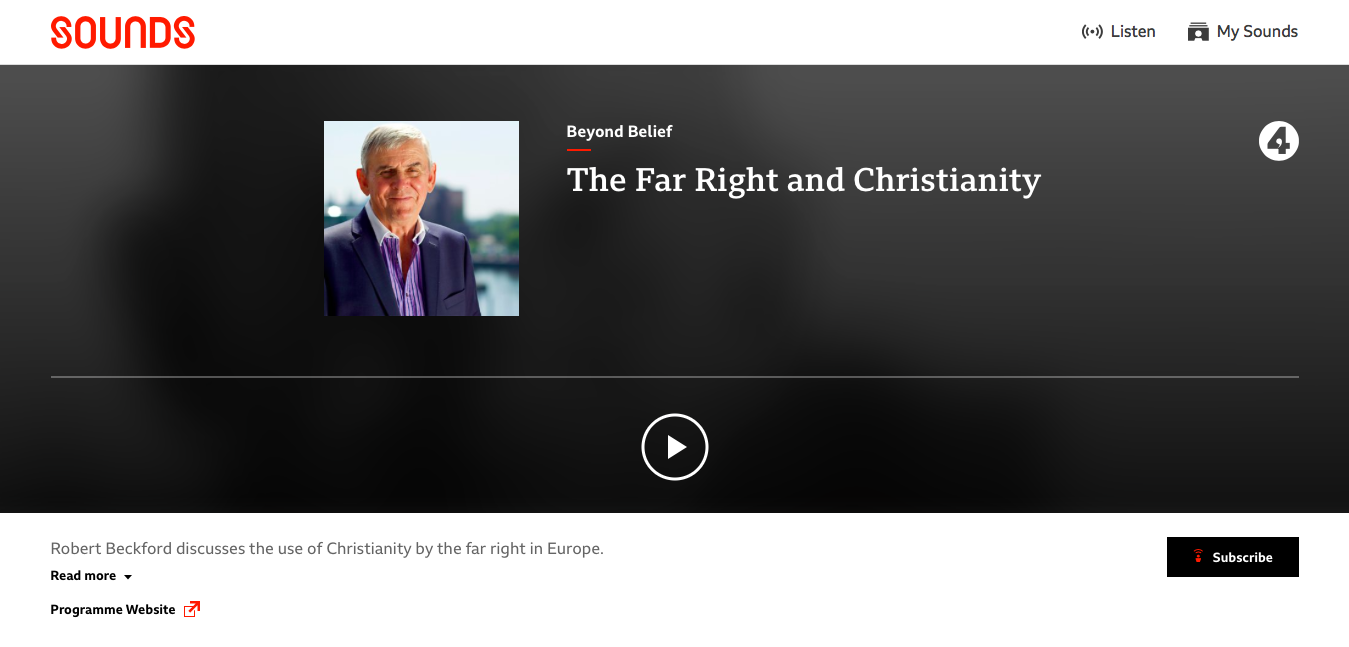
On Monday 3rd December CIRIS Graduate Research Associate Tobias Cremer discussed the uses of Christianity by the far right in Europe on the BBC Radio 4 programme Beyond Belief. Listen to full progamme on BBC Radio.
В
В
VIDEO: CIRIS Lecture on Religion and Right-wing Populism
CIRIS recently hosted an event with Alex Goerlach and Tobias Cremer on the use of religious rhetoric and imagery by right-wing populists on both sides of the Atlantic. The event was held at Clare College and moderated by CIRIS Managing Director Judd Birdsall.
CIRIS Trustee Jamie Hawkey Appointed New Canon Theologian at Westminster Abbey
The Reverend Dr James Hawkey has been appointed by the Crown to the Canonry of Westminster to be made vacant through the retirement of the Reverend Professor Vernon White in September.
James Hawkey, a former Minor Canon of Westminster, returns to the Abbey after three years as Dean and Director of Studies in Theology at Clare College, Cambridge.
He will be installed as Canon Theologian, and in his new role will have a particular responsibility for theological study and teaching. He will also become a member of the steering group for the Westminster Abbey Institute, established in 2013 with the aim of working with the public service institutions around Parliament Square to revitalise moral and spiritual values in public life. He will also be a Visiting Lecturer at King’s College London.
Continue reading at https://www.westminster-abbey.org/abbey-news/dr-james-hawkey-appointed-new-canon-theologian/
CIRIS Research Associate Leor Zmigrod Publishes Paper on Psychology of Brexit Voting
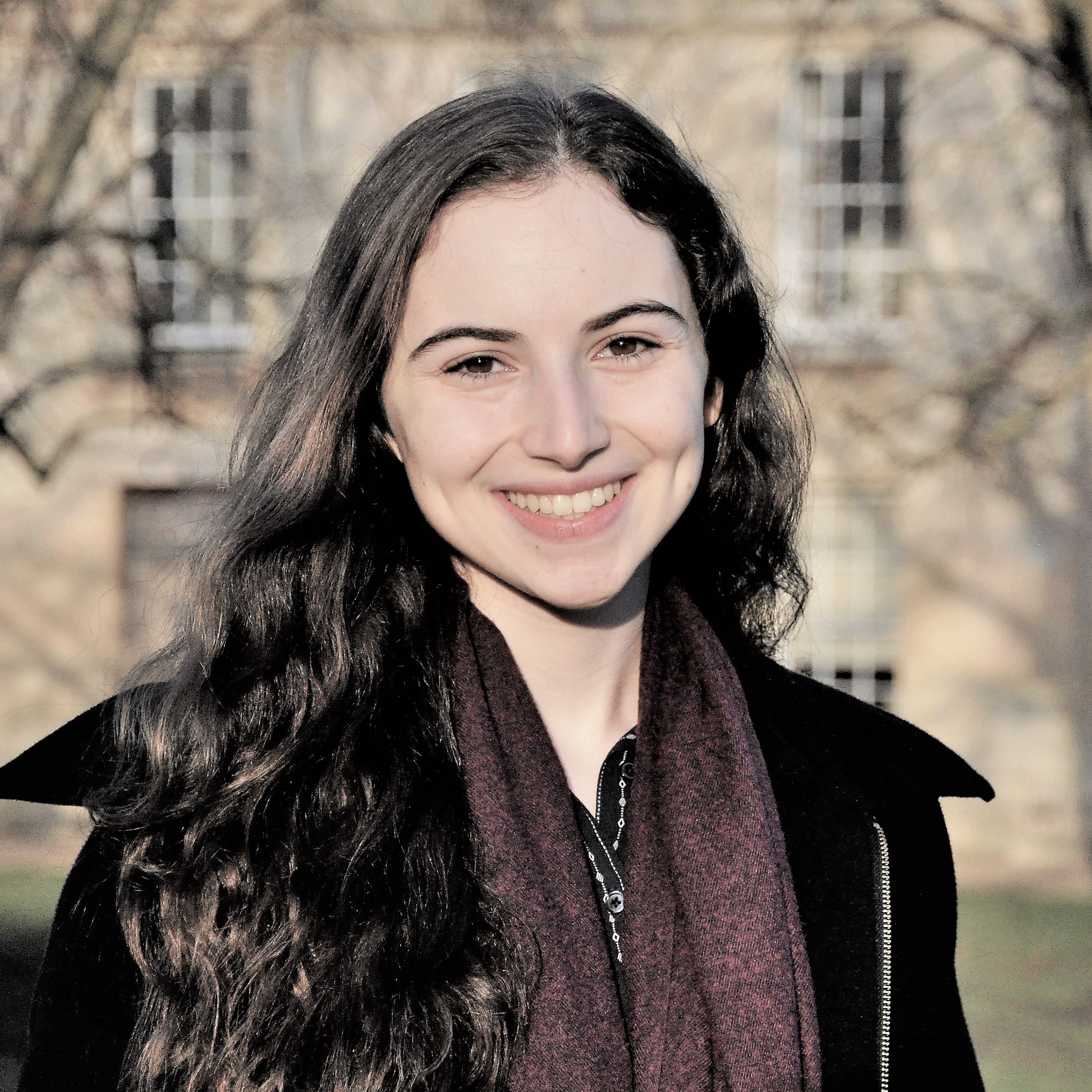
Leor Zmigrod
CIRIS Graduate Research Associate Leor Zmigrod has published a paper on the psychological processes that give rise to nationalistic ideologies in the context of the United Kingdom’s 2016 EU Referendum. The research identified cognitive information processing styles that contribute towards support for Brexit and opposition to immigration and free movement of labour. Specifically, the findings suggest that cognitive flexibility and acceptance of uncertainty predict less nationalistic attitudes. The study highlights the importance of looking beyond purely demographic factors when studying voting behaviour. The research was published this week in the Proceedings of the National Academy of Sciences, and has been covered by the Guardian, The Times, and The Independent, amongst others.
Cambridge University press release
В
В